Preparing hazardous household rubbish for compliant disposal
If you have old paint, batteries, bleach, aerosols, fluorescent tubes, or a half-used tin of weedkiller sitting in the cupboard, you already know the feeling: it's ordinary household stuff, but not quite ordinary waste. Preparing hazardous household rubbish for compliant disposal is about handling those items in a way that keeps people safe, protects the environment, and makes sure the waste can be accepted by the right disposal route without drama at the kerb, the depot, or the collection point.
Done properly, this is not complicated. But done badly? You can end up with leaks, broken containers, rejected waste, or a problem that grows arms and legs in the back of the car. Let's face it, nobody wants a mystery spill next to the shopping bags. In this guide, you'll find clear steps, common mistakes, practical checks, and a realistic view of what compliant disposal looks like in the UK.
You'll also see where careful sorting helps, when to stop and seek professional help, and how to think about hazardous items before they become a messy last-minute job.
Contents
- Why Preparing hazardous household rubbish for compliant disposal Matters
- How Preparing hazardous household rubbish for compliant disposal Works
- Key Benefits and Practical Advantages
- Who This Is For and When It Makes Sense
- Step-by-Step Guidance
- Expert Tips for Better Results
- Common Mistakes to Avoid
- Tools, Resources and Recommendations
- Law, Compliance, Standards, or Best Practice
- Options, Methods, or Comparison Table
- Case Study or Real-World Example
- Practical Checklist
- Conclusion
- Frequently Asked Questions
Why Preparing hazardous household rubbish for compliant disposal Matters
Hazardous household rubbish is different from general rubbish because it can injure people, contaminate other waste, or cause damage during handling and transport. Think about a cracked bleach bottle leaking into a bin, or a loose battery shorting against keys in a kitchen drawer. Small problem at home, bigger problem once waste is mixed, compacted, or stacked in a lorry. That's the core reason preparation matters.
There's also a compliance angle. Councils, household waste sites, and licensed waste handlers expect hazardous items to be separated, contained, and described accurately. If the waste is not prepared sensibly, it may be refused or handled inefficiently. And nobody enjoys a wasted journey to the tip on a rainy Saturday morning, especially with a boot full of awkward stuff rattling around.
Good preparation also protects the people who have to touch the waste next: collection crews, site staff, and disposal teams. A bit of care at home makes their work safer and makes the whole chain smoother. In our experience, that is where most issues are solved before they ever become visible.
Key point: compliant disposal starts before collection day. The real work is identifying what you have, keeping incompatible items apart, and making sure containers are secure enough to move without leaks or breakages.
How Preparing hazardous household rubbish for compliant disposal Works
The process is simpler than most people think. First, identify the item and decide whether it is hazardous, potentially hazardous, or just awkward. Then sort it by type so it does not contaminate other waste. After that, secure it in its original container where possible, or in a suitable secondary container if the original is damaged. Finally, choose the correct disposal route: council collection, household waste facility, retail take-back where available, or a licensed removal service.
There is a practical logic to all of this. Different waste streams are handled differently because some items react badly when mixed. Batteries, for example, can spark. Liquid chemicals can leak. Aerosols can burst under pressure if crushed or heated. Electrical items may contain batteries or components that need separate recovery. So the aim is not just to "get rid of it", but to prepare it so the next stage can happen safely.
You do not need a laboratory to do this well. What you need is calm sorting, a sturdy pair of gloves if items are dusty or dirty, basic labels, and a bit of common sense. If something smells sharp, fizzes, leaks, or feels unstable, stop and reassess. Better a slower job than a nasty surprise.
Typical household hazardous items
- Paint, varnish, thinners, and solvents
- Bleach, oven cleaner, drain cleaner, and other strong cleaning products
- Batteries, including button batteries and rechargeable packs
- Aerosols, even partly used cans
- Fluorescent tubes and certain light bulbs
- Car fluids or garage chemicals stored at home
- Pesticides, weedkillers, and garden chemicals
- Medicines that should not go in normal rubbish
- Small electricals with embedded batteries
That list is not exhaustive, of course. If you are unsure, treat the item cautiously and check the acceptance rules of the disposal route you plan to use.
Key Benefits and Practical Advantages
The immediate benefit is safety. Secure, separated hazardous waste is less likely to leak, spill, react, or injure someone. That matters in the kitchen, in the boot of the car, and at the point of handover. It also reduces the chance of contamination spreading to ordinary rubbish, which is a common and very avoidable issue.
There is a second benefit that people sometimes overlook: time. A properly prepared bag, box, or crate is much easier to process. That can save you from extra sorting at the site, repeated trips, or a rejected load. If you have ever stood there with two mystery containers while everyone else is trying to get on with their day, you'll know the value of being organised.
Another advantage is environmental. Hazardous household rubbish often contains materials that can be recovered, neutralised, or disposed of in a more controlled way than general waste. Preparing it properly helps direct each item to the right route, which is better than burying useful materials in landfill or mixing chemicals that should never meet each other.
And then there is peace of mind. Once the items are labelled, contained, and ready, you stop worrying about them. That alone is worth something.
Practical advantages at a glance
- Less risk of leaks, fumes, or breakage
- Smoother handover at the tip or collection point
- Lower chance of rejection or delays
- Better separation for recycling or specialist treatment
- Cleaner, safer storage while you wait for disposal day
Who This Is For and When It Makes Sense
This guidance is useful for pretty much anyone managing household clear-outs, not just people with a garage full of old paint. A single battery drawer can be just as awkward as a full loft clean. If you are decluttering before a move, sorting after a renovation, clearing a shed, or tidying up after years of "I'll deal with that later", this is for you.
It also makes sense for landlords, flat owners, and families dealing with inherited belongings, where the contents may include unknown or outdated products. Older homes sometimes hide surprise chemicals in cupboards or sheds, and those items deserve more attention than people give them at first glance.
For London households in particular, access and storage can be part of the problem. In a flat, you may need to hold items safely for a short time before collection. In a house, you may have a mix of garden chemicals, loft clutter, and renovation leftovers all at once. Different situation, same principle: sort first, move carefully, and avoid mixing waste streams unnecessarily.
It also makes sense if you do not have a car, cannot lift heavier items, or simply do not want the hassle of getting from A to B with something that might leak on the journey. To be fair, sometimes the sensible choice is not doing it yourself at all. That is not laziness. That is judgment.
Step-by-Step Guidance
Here is a practical way to prepare hazardous household rubbish without overcomplicating it.
1. Identify the item
Start by reading the label if it is still there. Look for symbols, warnings, strong odours, pressurised containers, or signs of corrosion. If the original packaging is missing, treat the item with extra caution until you know what it is.
2. Separate hazardous items from general waste
Do not throw batteries, chemicals, or aerosols into ordinary bin bags. Keep them apart from food waste, cardboard, textiles, and other household rubbish. Mixing them is where trouble starts.
3. Keep products in their original container where possible
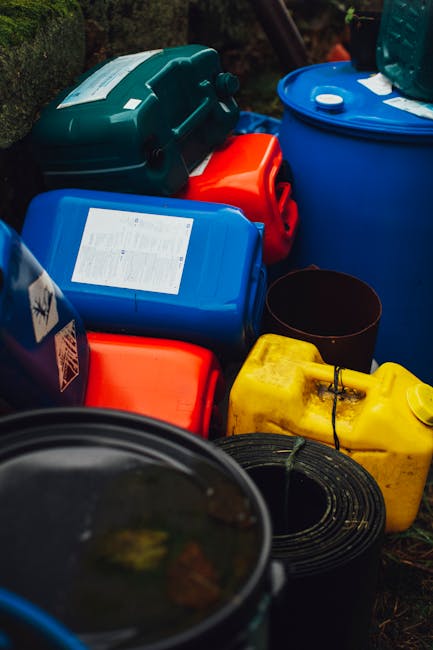
If the original container is intact, that is usually the best place for it. The label helps identify the contents, and the container is designed for that product. If the lid is loose, close it properly. If the container is damaged, place it upright in a second sturdy container or tray so it cannot leak during transport.
4. Do not mix different chemicals
This is a big one. Bleach should not be poured into something else. Paint thinners should not be combined with cleaning chemicals. And if you have any doubt at all, leave the items separate. It feels inefficient in the moment, but mixing is where things can go wrong very quickly.
5. Tape or isolate battery terminals where appropriate
Loose batteries can short-circuit if they touch metal or each other. A small piece of tape over the terminals can reduce that risk. Keep damaged batteries separate and avoid storing them near coins, keys, or tools. Little detail, big difference.
6. Pack items upright and secure
Use a rigid box, tub, or tray if items might topple. Keep liquid containers upright and avoid overfilling bags with sharp or heavy objects. If something could puncture a thin bag, assume it will.
7. Label what you can
If the container is unmarked or partly damaged, add a simple note describing the contents as accurately as you can. "Leftover gloss paint", "used batteries", or "garden pesticide" is far more helpful than "misc.". Clear labels help handlers decide what goes where.
8. Choose the right disposal route
Once sorted, decide whether your items are suitable for council collection, a household waste facility, a retailer take-back scheme, or a professional clearance service. The wrong route can delay everything.
9. Transport carefully
Put items somewhere stable in the vehicle. Use the boot if possible, line it if needed, and keep chemicals away from passengers. Do not leave them in a hot car for hours. That one is self-explanatory, but worth saying anyway.
10. Hand over with honest information
At drop-off or collection, say what you have. If something is damaged, leaking, or unidentified, mention it before anyone picks it up. Honest information helps staff keep the process safe.
Expert Tips for Better Results
A lot of the difference between a stressful disposal job and a smooth one comes down to small habits.
- Keep a dedicated "hazardous waste" box at home. A plastic crate or lidded tub can save you from storing batteries in drawers or balancing old sprays on a shelf.
- Group by type, not by where you found it. Paint with paint, batteries with batteries, cleaners with cleaners. That makes final disposal much simpler.
- Hold on to product lids and labels. A readable label often matters more than people think.
- Do a quick smell and leak check before moving items. If anything seems off, deal with it separately.
- Photograph uncertain items. If you need advice later, a picture can be more useful than memory alone. The brain, honestly, is not always a reliable filing system.
- Plan transport before the day. A cardboard box for upright bottles, old towels for minor drips, and a clear boot space can prevent a lot of faff.
A useful rule of thumb: if you would not want it tipping over onto your carpet, do not leave it unsecured in a bag.
Also, if the item is more than just a little awkward, step back and ask whether a professional removal service would actually save time. Sometimes the best DIY move is knowing when to stop.
Common Mistakes to Avoid
The biggest mistake is mixing things that should stay separate. People often toss half-empty tins, old cleaners, and aerosol cans into the same box because they all look like "rubbish". They are not the same. That shortcut can create leaks, incompatible reactions, or rejection at the disposal point.
Another common problem is removing labels. It sounds neat, but if the container was still readable, you've just made the job harder for everyone downstream. Keep labels intact where you can.
People also forget that damaged batteries and aerosols need a little more care than intact ones. A dented can or swollen battery should not be handled casually. Nor should items be crushed to save space. Space is not the issue; stability is.
Here are a few other slip-ups worth avoiding:
- Putting hazardous items in normal wheelie bins
- Pouring liquid products down drains without checking suitability
- Storing chemicals near heat sources or direct sunlight
- Transporting loose bottles next to shopping or soft furnishings
- Taking unidentified items to a collection point without warning anyone
- Assuming "part-used" means safe for general waste
Truth be told, most mistakes come from rushing. Slow down for ten minutes at the sorting stage and you save yourself a headache later.
Tools, Resources and Recommendations
You do not need special equipment for every job, but a few simple tools make hazardous rubbish preparation easier and safer.
| Tool or item | Why it helps | Best use |
|---|---|---|
| Sturdy lidded box or plastic crate | Keeps items upright and reduces spill risk | Bottles, sprays, and small chemical containers |
| Disposable gloves | Helps with dirty, dusty, or slightly degraded items | General handling and sorting |
| Tape | Can secure battery terminals or loose lids | Loose batteries and minor stabilising |
| Old towels or absorbent material | Helps contain small drips in transit | Liquids placed inside a secondary container |
| Marker pen and labels | Makes contents easier to identify | Unclear, damaged, or repackaged items |
| Camera phone | Useful for checking unfamiliar products later | Unknown containers, old labels, damage checks |
As for resources, your best starting point is usually the acceptance guidance from your local disposal route and the instructions printed on the product itself. For broader support, it can help to read about recycling and sustainability so you can separate items that can be recovered from items that need specialist treatment. If you are planning a bigger tidy-up, a page on rubbish clearance may also give you a sense of how a wider removal job is organised.
If you have more than a few awkward items, you may also find the practical advice on waste removal useful, especially where mixed household waste needs sorting before collection.
Law, Compliance, Standards, or Best Practice
In the UK, the basic expectation is that waste is handled safely, passed to the correct route, and not mixed in a way that creates risk. For households, that usually means following council instructions, household waste site rules, and the acceptance conditions of any private removal company you use. Exact procedures can vary by area, so it is worth checking local guidance rather than assuming every site works the same way.
For hazardous household rubbish, best practice is to keep items identifiable, prevent leaks, avoid cross-contamination, and use a disposal route that is authorised to take that type of waste. That might be a local authority facility, a specialist collection, or a licensed waste carrier. If a company is taking waste away for you, ask how they handle hazardous fractions and whether the items you have can be accepted. A proper operator should be able to explain this clearly, not just wave it through with a vague promise.
There is also a simple but important principle: do not misdescribe waste. If a container holds solvent-based paint, call it solvent-based paint. If a battery is swollen or leaking, say so. Accuracy helps with compliant disposal and avoids putting staff at risk.
For general household projects, it is also sensible to understand the broader difference between mixed rubbish, bulky items, and specialist waste. A related guide on waste disposal can help set that context before you start a larger clear-out. And if your project includes heavier household items as well as hazardous bits, bulk waste collection may be a useful part of the overall plan.
Options, Methods, or Comparison Table
There is no single best method for every household. The right choice depends on volume, risk, transport access, and how much sorting you are prepared to do.
| Method | Best for | Pros | Watch-outs |
|---|---|---|---|
| Local council disposal route | Small quantities of common household hazardous waste | Often convenient and familiar | Rules can be strict; opening hours and item limits may apply |
| Household waste recycling facility | Sorted items you can transport safely yourself | Can handle a wider range of items | You must package and carry everything correctly |
| Retail take-back or return schemes | Specific products such as batteries or certain electricals | Simple for targeted items | Limited to participating products or stores |
| Licensed removal service | Mixed, awkward, or larger quantities | Less handling for you; useful for clear-outs | May cost more than self-delivery |
For a quick single-item drop-off, self-delivery can be perfectly sensible. For a loft full of old tins, broken bulbs, and forgotten cleaning products, a managed collection is often less stressful. If you are weighing time against effort, that trade-off matters more than people admit.
If you are dealing with a whole room or property rather than a few items, it may also be worth comparing this with broader services such as house clearance or home clearance, particularly where hazardous items are only one part of the job.
Case Study or Real-World Example
A fairly typical scenario: someone clears out a spare cupboard and finds half-used paint, an old aerosol air freshener, a box of mixed batteries, and a leaking bottle of bathroom cleaner. None of it is alarming on its own, but together it creates a small puzzle. The instinct is usually to shove everything into one bag and deal with it later. That is exactly how people create avoidable messes.
The better approach is simple. The batteries are separated into a small container and kept away from metal objects. The paint tins stay upright and closed. The aerosol is checked for dents and stored away from heat. The leaking cleaner is placed inside a second container with an absorbent material underneath. Each item is labelled so nobody has to guess what it is later.
The result? No leaks in the car, no confusion on arrival, and no last-minute scramble to remember which bottle was which. It's not glamorous. But it works. And that's the point.
We've seen the same pattern in larger clear-outs too, especially where a garage or loft has become the default storage place for "I'll sort it next weekend". Once the hazardous bits are separated early, the rest of the clearance becomes much more straightforward. You can actually see progress, which is weirdly motivating.
Practical Checklist
Use this checklist before moving hazardous household rubbish for disposal.
- Have I identified each item clearly?
- Have I separated hazardous items from general rubbish?
- Are liquids closed, upright, and not leaking?
- Are batteries isolated from metal objects and taped where appropriate?
- Are aerosols, chemicals, and cleaners kept apart from each other?
- Have I kept the original labels where possible?
- Do I know whether the disposal route accepts these items?
- Is the transport container strong enough and stable enough?
- Have I planned where the items will sit in the car or van?
- Do I need gloves, absorbent material, or a second container?
- Have I checked whether any item is damaged, swollen, or unidentified?
- Am I confident this can be handled safely without specialist help?
If you get three or more of those items marked "no" or "not sure", pause and rework the plan. That little pause can save a lot of trouble.
Conclusion
Preparing hazardous household rubbish for compliant disposal is mostly about care, clarity, and making small decisions before they become big ones. Separate the items, keep them identifiable, use the right containers, and choose a disposal route that actually accepts what you have. That's the heart of it.
Once you get into the habit, it stops feeling like a special task and starts feeling like normal household management. A bit of structure, a bit of patience, and suddenly the cupboard full of awkward leftovers is no longer a worry hanging over you. Nice, really.
If your situation is simple, a careful DIY approach may be enough. If it is mixed, bulky, or time-sensitive, a professional service can make the process easier and safer. Either way, thoughtful preparation is what keeps things compliant and calm.
Get a free quote today and see how much you can save.
And if you do nothing else today, just sort the batteries. It's a small win, but a proper one.
Frequently Asked Questions
What counts as hazardous household rubbish?
It usually includes items that can leak, react, catch fire, or cause harm if handled like normal rubbish. Common examples are batteries, paint, strong cleaners, aerosols, pesticides, and some electricals.
Can I put old batteries in the general bin?
No, they should not go into ordinary household rubbish. Keep them separate, ideally in a small container away from metal items, and use the correct battery recycling or disposal route.
Do I need the original container for old chemicals?
It is best if you do. The original container keeps the contents identifiable and usually gives the safest packaging. If the container is damaged, use a secure secondary container and label it clearly.
How should I store hazardous items before disposal day?
Keep them upright, closed, away from heat, and separate from food, clothing, or general rubbish. A lidded crate or plastic tub is often the easiest temporary solution.
Can I mix different cleaning products together to save space?
No. Mixing cleaning chemicals is risky and can create fumes or reactions. Keep them separate, even if the containers are small or partly empty.
What should I do with a leaking bottle or cracked tin?
Move it carefully into a secondary container, keep it upright if possible, and avoid spreading the spill. If the contents are unknown or the leak is active, seek advice from the disposal route before transporting it.
Are aerosols safe to throw away if they are nearly empty?
Not usually in normal rubbish, no. Aerosols are pressurised containers and should be handled through the appropriate disposal route, even if they seem mostly empty.
Do councils accept all hazardous household waste?
Not always. Acceptance rules vary by council and site, and some items have quantity limits or special drop-off requirements. Check before you travel if you can.
Is a professional waste removal service better than DIY disposal?
It depends on how much you have, how awkward the items are, and whether you can transport them safely. For a few items, DIY may be fine. For mixed or bulky loads, a professional service can save time and reduce handling.
What if I do not know what a container holds?
Do not guess and do not mix it with other waste. Keep it separate, handle it cautiously, and use a disposal route that can advise you based on the container, label, or a photo.
Can hazardous items be collected with other household rubbish?
Only if the service specifically accepts them and you have prepared them correctly. In most cases, they need to be separated from general waste so they can be handled safely.
How do I know if an item needs special disposal?
Check the label for warnings, symbols, or words like corrosive, flammable, toxic, or pressurised. If the item is a battery, aerosol, chemical, solvent, or fluorescent tube, treat it as needing special attention unless you know otherwise.