Specialist Removal for Bulky Items: Cranes, Teams, Techniques
When a sofa will not fit through the stairwell, a heavy machine sits awkwardly in a back room, or a large item is simply too awkward to carry down a narrow London staircase, you need more than muscle. You need planning, the right people, and the right lifting method. That is where Specialist Removal for Bulky Items: Cranes, Teams, Techniques comes in.
This kind of work is not just "heavy lifting with a van." It is a coordinated process that can involve dismantling, route checks, protective padding, lifting gear, and, in some cases, a crane or hiab-style solution. Done well, it protects your property, your neighbours, and the item itself. Done badly, well... things get noisy, expensive, and a bit stressful very quickly.
In this guide, we will break down how specialist bulky item removal actually works, when it makes sense, what teams do on the day, how cranes fit into the picture, and which techniques reduce risk. You will also get a checklist, a comparison table, and practical tips you can use before booking anything.
Why Specialist Removal for Bulky Items: Cranes, Teams, Techniques Matters
Bulky item removal matters because large objects create a different type of problem from standard rubbish collection. A mattress, fridge, wardrobe, or office cabinet may sound straightforward, but once you factor in staircases, door widths, weight distribution, shared entrances, parking access, and property protection, the job becomes more technical than people expect.
Specialist removal is about reducing uncertainty. A good team does not just arrive and hope for the best. They assess the item, measure the route, decide whether manual carrying, dismantling, mechanical assistance, or crane access is the safest option, and then work methodically. That planning is often what separates a smooth job from a messy one.
There is also a practical reality in busy urban areas. In places like central and north London, access can be limited, parking may be tight, and the nearest lift may be out of service on the very day you need it. We have seen jobs where one awkward turn in a hallway was the whole issue. One turn. That is all it takes.
For customers, specialist removal matters because it protects three things at once:
- Your property - walls, floors, bannisters, door frames, and lifts can all be damaged by rushed handling.
- Your time - the right technique saves repeated attempts, delays, and the classic "we'll need to come back tomorrow" moment.
- Your safety - large items are awkward, and awkward is where injuries happen.
It also matters from a responsibility point of view. If the item is waste, it needs to be handled and disposed of properly. If it can be reused or recycled, specialist handling can help recover value from it instead of sending everything to landfill. That is why services such as bulky waste collection and furniture disposal are often used for items that are too large or awkward for ordinary collection routes.
How Specialist Removal for Bulky Items: Cranes, Teams, Techniques Works
At a basic level, the process has three moving parts: assessment, execution, and handover. That sounds simple enough, but each part can involve a lot of judgement.
1. Assessment and route planning
The team starts by understanding what needs moving. Is it a single item or several? Can it be broken down? How heavy is it? What is the shape? A bulky wardrobe is not the same as a commercial fridge, and both are very different from a hot tub or a piece of office machinery.
They then look at the route from the item's current position to the exit point. This includes staircases, lifts, tight corners, low ceilings, narrow hallways, front gardens, rear access, and whether the item needs to pass over balconies or through windows. In some cases, that assessment can be done from photos and measurements. In others, a visit is wiser.
2. Choosing the right technique
Once the route is known, the team decides on the removal method. Common approaches include:
- Manual carrying with two or more trained operatives.
- Disassembly so the item can be moved in smaller parts.
- Furniture dollies, straps, and sliders for controlled movement across floors and hard surfaces.
- Stair trolleys for controlled descent or ascent on steps.
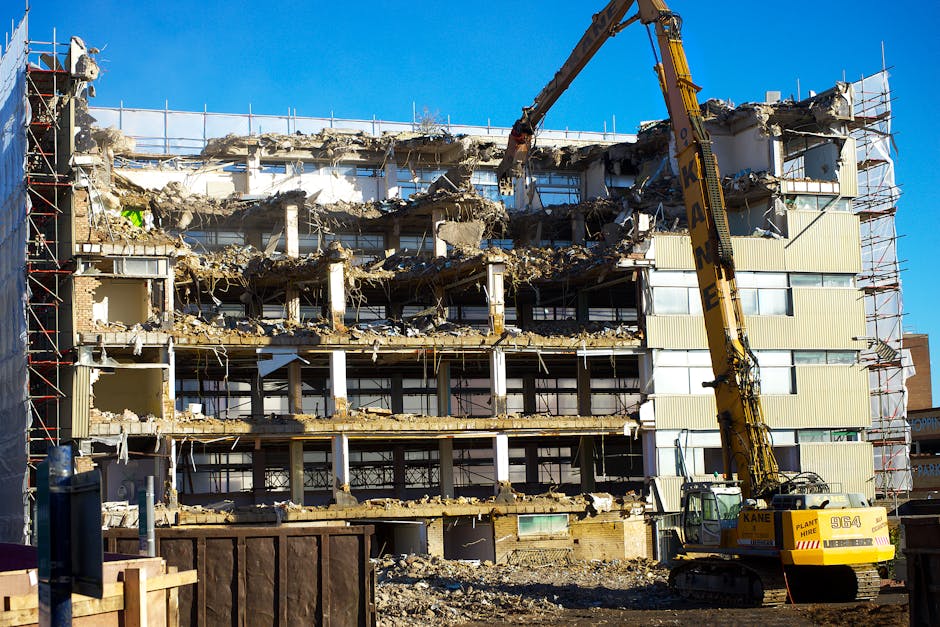
- Crane lifting when internal access is not workable or safe.
- Vehicle-assisted loading where the item can be moved directly from an accessible ground-level point.
Crane work is usually reserved for awkward access situations, higher floors, oversized items, or situations where internal movement would create too much risk. Truth be told, it is not the first choice for every job, but when it is needed, it can be the cleanest solution.
3. On-site protection and coordination
Before the item moves, the team typically protects floors, corners, and entry points. Mats, blankets, edge protectors, and wrap materials are common. If a crane is involved, the operation may require temporary exclusion zones, vehicle positioning, and careful communication between the ground team and the lifting team. Everything must happen in sequence, not all at once.
This is also where a strong team matters. A single experienced operative can only do so much. A coordinated crew can guide, lift, spot hazards, clear the route, manage public space, and keep the job calm. Calm helps. A lot.
4. Removal, loading, and disposal
After the item is extracted, it is loaded securely and taken for reuse, recycling, disposal, or transfer to another location. If you are arranging household clearance, this may be part of a broader job such as house clearance or home clearance. If it is commercial, the task may sit alongside office clearance or business waste removal.
Key Benefits and Practical Advantages
Specialist removal has clear benefits, but the best way to think about them is in real-world terms rather than sales language.
- Safer handling - trained teams know how to lift awkward loads and how not to trap fingers, backs, or walls in the process.
- Better access solutions - not every property needs the same method, and flexibility matters.
- Less disruption - a controlled operation is quieter, quicker, and easier on neighbours.
- Reduced damage risk - proper lifting technique and route protection help avoid scrapes and breaks.
- More reliable timing - when access is planned well, the whole job tends to run to schedule.
- Cleaner finish - specialist teams often leave the area tidier than a rushed DIY attempt would.
There is also a less obvious benefit: decision clarity. Once you know whether an item can be carried, dismantled, or crane-lifted, the whole job becomes much easier to organise. You are not guessing anymore.
Expert summary: The best bulky item removals are not defined by brute force. They are defined by the right method, the right team size, and enough planning to make the heavy part look almost boring. And boring is good, frankly, when you are moving something heavy.
If you are comparing services, you might also look at related options such as large item collection, waste clearance, or rubbish removal depending on the item type and how much else needs shifting.
Who This Is For and When It Makes Sense
Specialist removal is not just for big businesses or unusual one-off jobs. It suits a wide range of people and situations.
Homeowners and tenants
If you are replacing old furniture, clearing out after a move, or dealing with a room full of items that no longer fit your space, specialist removal can save time and frustration. A common example is a sofa that will not turn on the landing, or a bed frame that looks simple until you realise the stairs are narrower than the mattress itself.
Landlords and letting agents
For end-of-tenancy clearances, fast turnaround matters. Specialist teams can remove bulky items without delaying cleaning, repairs, or viewings. This is especially useful in flats, where access and shared common areas can be a bit tricky.
Businesses and offices
Offices often deal with desks, filing cabinets, shelving, reception furniture, and equipment that cannot just be moved by one person and a hopeful attitude. If you are clearing out a workspace, specialist removal may sit alongside office clearance or builders waste clearance where refurbishment is also underway.
Property managers and facilities teams
When a bulky item blocks access or creates a safety issue, you need a dependable removal plan. In communal buildings, this matters even more because narrow access points, shared lifts, and resident complaints can complicate things quickly.
When a crane becomes sensible
A crane-based removal makes sense when:
- the item cannot safely pass through the building;
- the staircase or lift is too tight;
- the item is too large for manual manoeuvring;
- the property layout makes internal movement risky;
- speed and reduced disruption are priorities.
It is not always the cheapest route, but sometimes it is the most sensible one. There is no prize for insisting on the hard way.
Step-by-Step Guidance
If you want a smooth removal, the process is easier to manage when you break it into stages. This is where a little preparation pays off in a big way.
- Identify the item precisely. Note the type, size, approximate weight, and whether it can be dismantled.
- Measure access points. Check doors, hallways, stairs, lifts, and external access routes. Take photos if possible.
- Confirm the building conditions. Look for low ceilings, corners, tight turns, weak flooring, or shared spaces that need protection.
- Decide whether the item must be carried, dismantled, or lifted. This is where experience matters. A quick assessment can save an awful lot of guesswork.
- Book the right team size and method. If access is difficult, do not under-resource the job.
- Prepare the route. Clear loose items, secure pets, and make sure parking or loading access is available where needed.
- Protect surfaces. Floor coverings, corner guards, and wraps should be in place before the item moves.
- Remove in a controlled sequence. One person leads, another spots, and the rest manage balance and movement.
- Load securely. The item should be stable before the vehicle moves off.
- Check the space afterwards. A quick final sweep avoids leaving behind fixings, debris, or packaging.
A small but useful tip: measure the item and the access route yourself before the appointment. Even rough measurements can reveal if the job is likely to be straightforward or if you need a different method. You do not need to become a surveyor, of course. Just be a little nosy with a tape measure.
Expert Tips for Better Results
Over time, the jobs that go best tend to share the same habits. Nothing flashy. Just disciplined basics.
- Photograph every awkward point. Corners, stairs, railings, balcony access, basement steps, and narrow doors all matter.
- Leave extra time for access. In London, parking and lift access can add unexpected minutes. Sometimes more.
- Use the least disruptive method that still feels safe. Not every job needs a crane, but not every job should be forced through a staircase either.
- Keep neighbours in mind. A polite heads-up can make a noisy move far easier to manage.
- Disassemble when it genuinely helps. A few screws now can save damage later.
- Think about the item's end point. Reuse, recycling, disposal, or resale all affect the handling approach.
One thing people sometimes overlook is flooring. Smooth timber, polished stone, or old vinyl can all be vulnerable to scuffs when a bulky item is moved with even mild friction. You notice that sort of thing very quickly once the job is done, and by then it is too late. Better to cover it first.
Another practical point: good crews communicate continuously. Not loudly, not dramatically, just clearly. A short "pause," "clear," or "turning now" can prevent bumps and damaged trim. It sounds almost too simple, but it works.
Common Mistakes to Avoid
Most bulky item problems are not caused by the item itself. They are caused by bad assumptions.
- Guessing the weight. Heavy-looking and actually-heavy are not always the same thing. A compact item can be deceptively dense.
- Forgetting access constraints. A beautiful sofa is still a problem if the hallway turns are too tight.
- Assuming the building can handle the load. Floors, stairs, and balconies all have limits and should be treated carefully.
- Not checking whether the item can be dismantled. Sometimes a simple strip-down makes all the difference.
- Booking the wrong method for the property. A ground-floor home and a top-floor flat are different jobs, even if the item is identical.
- Leaving clearance too late. If you are in a move-out or refurbishment window, timing becomes critical fast.
- Trying to save money by under-planning. It is rarely a bargain if the crew has to revisit or the item gets damaged.
A classic mistake is assuming "we'll just carry it down." Maybe. Maybe not. If the route has sharp bends or narrow landings, that confident plan can collapse in about twelve seconds. No drama, just physics.
Tools, Resources and Recommendations
The right tools make bulky item removal safer and more controlled. You do not need to know every item on the truck, but it helps to understand the basics.
| Tool or resource | What it does | Why it matters |
|---|---|---|
| Moving straps | Helps distribute weight between handlers | Reduces strain and improves control |
| Furniture dollies | Rolls heavy items across level surfaces | Useful for large cupboards, appliances, and cabinets |
| Stair trolley | Assists movement on steps | Improves safety on stair-heavy routes |
| Protective blankets and wrap | Cushions edges and surfaces | Protects the item and the property |
| Corner guards | Covers vulnerable corners and trim | Helps avoid scrapes in narrow access points |
| Crane or lifting vehicle | Moves items via external lift | Useful where internal access is not workable |
| Route photos and measurements | Supports planning before arrival | Reduces surprises and wasted time |
For related household items, it can also help to look at specialist pages such as sofa removal, bed disposal, mattress disposal, or fridge disposal. These are often simpler than full crane jobs, but the same careful thinking still applies.
And if you are trying to plan around local collection options, pages like council large item collection and council rubbish collection are useful reference points. Just bear in mind that council services may not suit every bulky item, especially if the access or timing is awkward.
Law, Compliance, Standards, or Best Practice
For bulky item removal, compliance is mostly about safety, duty of care, and responsible waste handling. The exact requirements vary by situation, but a careful service should think through the following:
- Health and safety practice - manual handling should be planned, not improvised.
- Risk assessment - especially for awkward access, public pavements, shared areas, and crane operations.
- Property protection - floors, walls, doors, and communal areas should be safeguarded where needed.
- Waste transfer and disposal handling - items designated as waste should be transported and disposed of responsibly.
- Insurance awareness - for higher-risk or access-heavy jobs, the provider should be able to explain how they manage safety and liability.
In the UK, best practice generally means working carefully, documenting what is being removed, and ensuring that waste goes to an appropriate facility or reuse route. If you are dealing with commercial waste, the standard of record-keeping and accountability should be higher still. That is especially true for office clearances, mixed loads, or jobs involving electrical items.
You can also review a provider's own public policies, such as health and safety policy, insurance and safety, recycling and sustainability, and payment and security. Those pages do not replace judgment on the day, but they do help you understand how seriously a company treats the work.
If you are unsure whether a job is straightforward or more technical, ask how the team would handle route protection, lifting method choice, and waste destination. Clear answers usually tell you plenty.
Options, Methods, or Comparison Table
Not every bulky item needs the same solution. The best method depends on the item, the access, the urgency, and how much disruption you can tolerate.
| Method | Best for | Pros | Trade-offs |
|---|---|---|---|
| Manual team lift | Items with manageable weight and enough access | Flexible, often efficient, less equipment needed | Can be risky in tight spaces or on stairs |
| Disassembly and carry-out | Large furniture, shelving, some office items | Improves access, reduces damage risk | Takes time and may require tools |
| Stair trolley or dolly system | Heavy items on stepped routes | Controlled movement, less strain | Still depends on staircase width and stability |
| Crane or external lift | Top-floor flats, oversized items, blocked internal routes | Bypasses difficult access, can reduce internal damage | Needs planning, space, and sometimes more coordination |
| Collection with broader clearance | Multiple bulky items or full-room clearances | Efficient for larger jobs | Can be less targeted if only one item is involved |
For many households, the choice sits between a general removal option and a more targeted specialist removal. If the job is simple, a furniture collection or sofa collection may be enough. If access is awkward or the item is particularly challenging, a specialist crew is often the better call.
Case Study or Real-World Example
Here is a realistic scenario that comes up often in London.
A client in a top-floor flat had a large wardrobe that had been assembled in the room years earlier. It looked harmless enough, but it had to come out before new flooring was installed. The stairwell was narrow, the landing had a tight turn, and the building's shared lift was too small to help.
At first glance, it seemed like a standard carry-down job. But once the team assessed the route, it became clear that forcing it through the staircase would risk damage to the walls and probably the wardrobe too. The crew broke the wardrobe down into sections, protected the route, removed fixings carefully, and moved each piece in a controlled sequence. No drama. No shouting. Just steady work.
In another job, a heavy item had to be removed from a rear room with no practical internal route. The team used a crane-assisted solution instead of trying to twist it through the building. That choice saved time and avoided damage to the stairwell. You could almost hear the relief from the property owner when it was done. That quiet "thank goodness" moment is more common than people think.
The lesson is simple: the right method is not the most ambitious one. It is the one that fits the property.
Practical Checklist
Use this before you book or confirm a bulky item removal. It is a small thing, but it helps.
- Have you identified the exact item and its approximate size?
- Have you checked whether it can be dismantled safely?
- Have you measured doorways, stairs, and key turns?
- Have you photographed any tight or awkward access points?
- Do you know whether the item needs manual removal or a crane-based solution?
- Have you thought about parking, loading, or vehicle access?
- Have you protected pets, children, and shared spaces on the day?
- Do you know whether the item is for reuse, recycling, or disposal?
- Have you checked whether this sits alongside other clearance work?
- Have you allowed enough time for careful handling?
If you are also clearing other rooms, it may be worth combining the job with loft clearance, garage clearance, or flat clearance so the team can make one efficient visit instead of several. That often feels less chaotic, which is no bad thing.
Conclusion
Specialist removal for bulky items is really about judgement. Cranes, teams, and techniques are only useful when they are matched to the property, the item, and the real conditions on the day. Get that right and the job feels smooth, controlled, and far less disruptive than most people expect.
Whether you are moving one awkward sofa, clearing a heavy wardrobe, or planning a more complex access-heavy removal, the smartest approach is always the same: measure first, plan properly, and choose the method that makes the job safe and straightforward.
Get a free quote today and see how much you can save.
And if the job feels a bit daunting, that is normal. Heavy items have a way of looking even heavier when they are blocking the hallway. The good news? With the right team and the right method, it becomes manageable.
Frequently Asked Questions
What counts as a bulky item?
A bulky item is usually anything too large, heavy, or awkward for standard household collection. Sofas, wardrobes, beds, fridges, office cabinets, and large appliances are common examples.
Do I always need a crane for bulky item removal?
No. In many cases, manual removal, dismantling, or stair equipment is enough. A crane is usually considered when access is too tight, the item is oversized, or internal movement would be unsafe.
How do I know whether an item can be taken through the stairs?
Measure the item and the tightest points on the route, including doors, landings, and corners. If the item needs to turn sharply or pass through narrow gaps, specialist assessment is a good idea.
Is bulky item removal suitable for flats?
Yes, very often. Flats are one of the most common situations where specialist removal helps, especially when lifts are small, staircases are narrow, or communal areas need protecting.
What is the difference between bulky waste collection and specialist removal?
Bulky waste collection is often more general, while specialist removal focuses on difficult access, awkward items, or methods such as dismantling and crane lifting. They can overlap, but they are not always the same thing.
How many people are usually needed for a bulky removal job?
It depends on the item and the access route. Some jobs need two operatives; others need a larger team for control, safety, and coordination. Complex lifts may also need additional spotters or equipment support.
Can bulky items be reused or recycled?
Often, yes. If the item is in usable condition, reuse may be possible. If not, materials such as metal, wood, or certain plastics may still be suitable for recycling depending on the item and its condition.
What should I do before the team arrives?
Clear the route, measure access points, secure pets, and make sure parking or loading space is available where needed. Photos of awkward corners or stairs can also be very helpful.
How long does specialist bulky item removal take?
It varies. A simple item may take very little time, while a tricky access job or a crane-assisted removal can take much longer because of planning, protection, and coordination.
Are there extra safety concerns with heavy furniture or appliances?
Yes. Heavy items can shift unexpectedly, damage flooring, trap fingers, or strain backs if handled badly. That is why trained handling, route protection, and the right equipment matter so much.
What if my item cannot be dismantled?
If an item cannot be broken down, the removal method has to be based on its full size and weight. That may mean more handlers, different equipment, or an alternative access route.
Can specialist removal help with commercial clearances too?
Absolutely. Offices, shops, and other business spaces often have large furniture, shelving, equipment, and mixed waste that need careful removal. In those cases, specialist planning is often even more important.
What is the safest way to choose between methods?
Start with access. If the item fits comfortably and the route is simple, manual removal may be enough. If the route is awkward or risky, disassembly or crane lifting may be the safer answer. A proper assessment is the best guide.
Should I compare prices or focus only on method?
Both matter, but method comes first. The cheapest option is not always the most practical if it causes delays or property damage. A sensible quote should reflect access, labour, equipment, and disposal needs.